



The Euromind company in Spain, together with the School of Art Industry, Tokajícka 24, Bratislava, developed a practice program, coordinated with the school's educational objectives. The Euromind company ensured the receiving organizations where students performed their practice, architecture studies, their technical departments, which develop custom building and interior projects, are responsible for material implementation and project realization, where our students became familiar with the principles of sustainable design in interiors.
When we found out that our project New technologies in interior design was approved, we agreed with the school management and the supporting organization on the date of the mobility implementation. Before the mobility, we informed the school management, professional teachers, class teachers, students, and parents about the project's content and objectives at meetings, class hours, and the parents' association. In addition, we informed about the project on the school's website and Facebook page. Class teachers, in cooperation with subject teachers and English language teachers, selected students and alternates based on predetermined criteria, who prepared motivational letters and resumes.
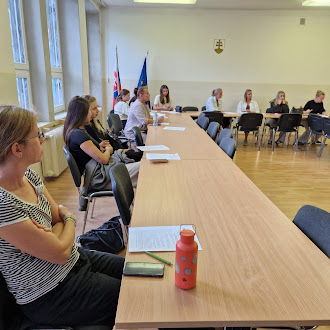
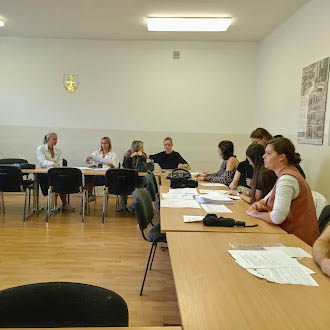
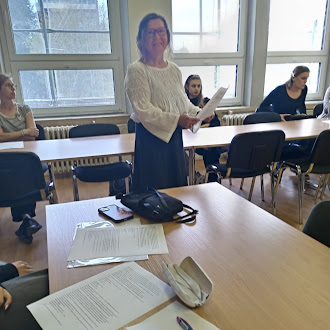
We sent the documentation to the assigned coordinator from the Euromind company. In June, the first informational meeting of the selected students with the coordinator and accompanying teachers took place. Additionally, at the end of June, we organized an online meeting of students with the supporting organization's coordinator Antonio Piccolo via Google Meet, where each student individually and progressively answered the Spanish partner's questions. The second informational meeting took place a week before mobility in the school's conference room. This meeting was also attended by the parents of the students who were selected to go to Malaga.
Documentation of the period during mobility
After completing the practice, students received a certificate. Each participant prepared a final report in English on the last day of their stay in Malaga, which contained detailed information about the host organization where they practiced, the project they worked on, the tasks they solved, and the results of the project. After returning from mobility, they informed the other students and teachers of the school, as well as potential applicants for study, about the results of the practice in Spain on the Open Day. In addition, each mobility participant sent a report on mobility in the Slovak language to the project coordinator, which contained the tasks solved and the outputs.
For the dissemination of results, we created a video, a presentation about mobility in Spain, a banner, a presentation panel with examples of outputs. The final product is the output of all project participants.